
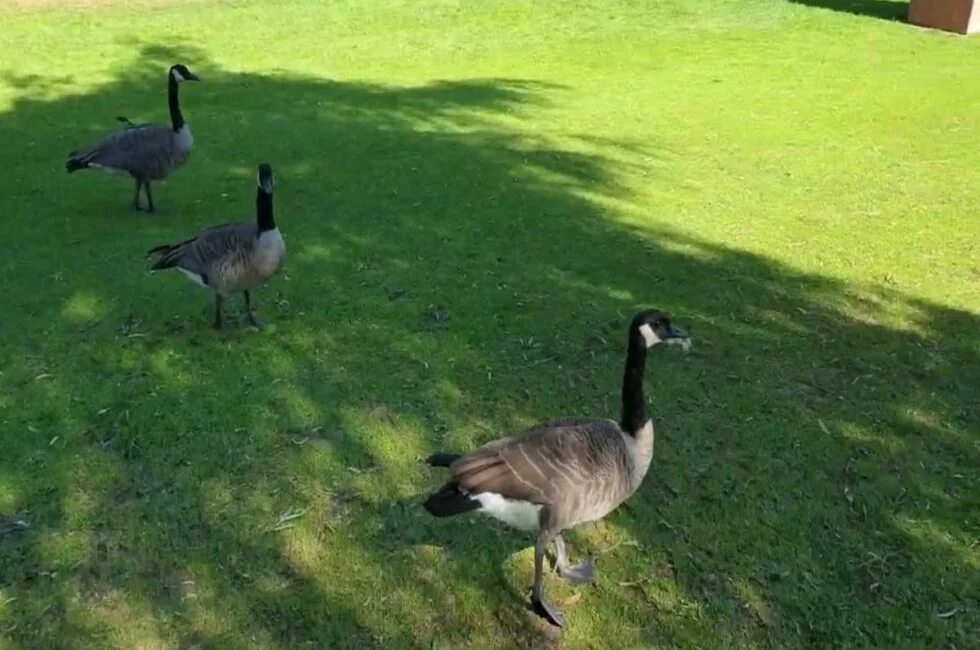
Imagine you’ve just spent your Saturday mowing the lawn, edging the garden beds, and making your yard look amazing. You wake up Sunday morning, coffee in hand, ready to admire your work, and there they are.
Twenty Canada geese treating your lawn like an all-you-can-eat buffet and bathroom combined.
The good news? You’re not alone. The better news? There are actually effective ways to solve this problem in 2026.
But first, let’s talk about why geese are so obsessed with your property in the first place.
Why Geese Are Attracted to Your Lawn?
Geese love short grass because they can see predators coming from far away. They love water nearby because they feel safe. They prefer open spaces because they can waddle around with their goslings without obstacles.
Moreover, geese return to the same spots year after year. One pair of geese can quickly turn into a flock of 50 when they start bringing their group.
The Real Cost of Having Geese on Your Property
Let’s get real about what we’re dealing with here:
The Gross Factor
A single goose produces up to 2 pounds of droppings every single day. That means 20 geese can cause around 280 pounds of waste in just a week. Your kids can’t play on the grass and your dog can track it into the house. And it’s not just disgusting, it’s potentially dangerous as well.
Goose droppings can contain harmful bacteria and parasites. If you’re wondering if goose poop is toxic, the short answer is: YES, it can be, especially for young children and people with compromised immune systems.
The Property Damage
Beyond the waste, geese are destructive. They’ll eat your newly planted grass seed, pull up young plants, and damage landscaping you’ve invested thousands of dollars into. They’re territorial during nesting season and can become aggressive toward people and pets.
The Embarrassment Factor
Invite friends over for a barbecue or want to sell your house? Nothing kills a beautiful look faster than a goose-infested property.
Methods That Don’t Work (Save Your Money and Time)
Before we get to solutions that actually work, let’s talk about what doesn’t work. WHY? Because you’ve probably already tried some of these, and I don’t want you wasting more time and money.
Fake Predator Decoys
Those plastic coyotes and fake owls you see at the hardware store? Geese figure them out in about three days. They’re smart enough to realize that the “coyote” hasn’t moved an inch since Tuesday. Don’t waste your money.
Commercial Repellent Sprays
Most chemical repellents wash away with the first rain. Even the ones that don’t rarely work on geese. They’ll just move five feet over and keep eating. Plus, spraying chemicals all over your lawn where your kids and pets play is not a safe option.
Chasing Them Away Manually
Sure, you can run at them like a crazy person every morning at 6 AM. They’ll fly away, circle around, and land right back where they were ten minutes after you go inside.
Fake Swan Decoys
Geese are supposedly afraid of swans, right? WRONG. They figure out pretty quickly that your plastic swan isn’t going to do anything.
How to Keep Geese Off Your Lawn: Methods That Actually Work
Alright, let’s get into the real solutions. These are proven methods that actually keep geese away when implemented correctly.
1. Motion-Activated Deterrent Systems
This is the best deterrent for geese in 2026. Because geese never get used to it. Modern motion-activated systems use sensors to detect when geese approach, then deploy a deterrent that startles them away before they can settle.
The main benefit of it is the randomization, because the activation varies, geese can’t adapt to it like they do with static solutions. The beauty of this approach is that it’s completely automated, and requires no daily effort from you.

2. Habitat Modification
If you want to know how to keep geese off your property long-term, you need to make your property less attractive to them.
Let Your Grass Grow Taller
Geese hate tall grass (6+ inches) because they can’t see predators. If you can tolerate slightly longer grass around your waterfront or problem areas, this helps.
Remove Food Sources
Don’t feed geese, ever. And make sure your neighbors aren’t either. Once geese learn that humans mean food, they lose their natural wariness and get used to it very quickly.
Add Visual Barriers
Tall shrubs or ornamental grasses between your lawn and water access points can discourage geese from waddling up from the shore. They prefer easy access and clear sightlines.
3. Physical Barriers and Fencing
For smaller areas like gardens or specific landscape features, physical barriers can work.
Low Fencing
Geese don’t like obstacles. A low fence (even 2-3 feet) around garden beds can deter them because they prefer open areas where they can waddle freely. They don’t like confined spaces.
Grid Systems for Water Features
Wondering how to keep geese out of your pond? String a grid system of monofilament line about 6-12 inches above the water surface. Geese need a clear landing zone, and the strings interfere with their landing approach. This works well for smaller ponds.
Border Plantings
Dense shrub borders between your lawn and any water features create psychological barriers. Geese are nervous about areas where predators could hide.
4. Professional Egg and Nest Management
If you’ve got nesting geese, you’re in for a rough few months. Adult geese with goslings are extremely territorial and aggressive. Many states allow egg addling or removal with proper permits.
This involves treating eggs so they don’t hatch, which prevents population growth on your property. Contact local wildlife management for legal options in your area.
5. Dog Patrol (With Caveats)
Some breeds, particularly Border Collies, can be trained to herd geese away from properties. This is how golf courses and some commercial properties manage geese.
The catch? Your dog needs to be trained, and you need to do this consistently. It’s also not humane to let your dog chase or harm the geese, the goal is just to make them uncomfortable enough to leave.
Making Your Waterfront Property Goose-Free
If you’ve got lakefront or beachfront property, you’re dealing with an extra challenge. Water is a magnet for Canada geese, and the best way to keep geese off your property starts with understanding their water-to-land habits.
Geese spend their nights on the water for safety, then waddle onto shore each morning to graze. They prefer properties with:
- Easy water access
- Short grass right up to the shoreline
- Clear sightlines in all directions
- No predator cover
Your strategy should interrupt as many of these preferences as possible:
Create Uncomfortable Access Points
If possible, make the transition from water to land less appealing. Rocks, steeper slopes, or thick plantings at the water’s edge make geese think twice.
Increase Activity
Geese avoid areas with frequent human activity. The more you use your beach or shoreline, the less comfortable they’ll be. But let’s be honest, you can’t be outside 24/7, which is why automated solutions work better.
Maintain Your Beach Area
Keep beach areas clear of food scraps. Clean up any goose droppings quickly. The more geese see evidence of their flock on your property, the more attractive it becomes to newcomers.
How to Keep Geese Off Your Lawn Long-Term (Prevention Strategies)
Getting rid of geese is one thing. Keeping them away permanently is another. Here’s your long-term prevention strategy:
Start Early
Don’t wait until you have 50 geese on your lawn. The moment you see the first one, take action immediately. It’s much easier to prevent a problem than to solve an entrenched one.
Be Consistent
Whatever method you choose for how to keep geese off your lawn, consistency is everything. If you scare them away one day but not the next, they’ll learn that your property is still a viable option.
Work With Neighbors
If your neighbor is feeding geese or allowing them to nest undisturbed, your efforts might not be enough. Have a friendly conversation about community-wide management strategies.
Understand Legal Protections
Canada geese are protected under the Migratory Bird Treaty Act. You cannot harm them, destroy their nests (without permits), or use methods that injure them. Always use humane, non-lethal deterrent methods.
Monitor and Adjust
Pay attention to what’s working. If you notice geese adapting to your methods, change things up. This is why static solutions eventually fail, geese are smart enough to recognize that your plastic model isn’t a threat.
The 2026 Solution: Automated Protection That Actually Works
In 2026, you don’t need to spend your weekends chasing geese or your money on solutions that don’t work.
Motion-activated deterrent technology has revolutionized how homeowners handle wildlife problems. Instead of static decoys or daily manual efforts, modern systems detect approaching geese and deploy deterrents automatically.
The complete goose and deer cop system represents the latest in this technology. Built and tested in Michigan since 2016, this patented system uses wireless motion sensors to protect areas up to 100 x 50 feet automatically.
Here’s how it works:
When geese approach, passive infrared sensors detect their movement and instantly activate an inflatable deterrent with sound and visual elements. The randomized activation patterns prevent geese from adapting, unlike static solutions they simply ignore after a few days.
Why homeowners love this approach:
- Set it and forget it: No daily effort required from you
- 24/7 protection: Works around the clock, even when you’re not home
- Weather-proof: it keeps working in rain, snow, and extreme heat
- Humane: Just makes them uncomfortable enough to leave without any harm
- Expandable: Add up to 8 sensors for complete property coverage
- Made in USA: Quality construction that lasts years, not months
Within the first week, most homeowners see considerable reductions in geese visiting their property. The beach becomes usable again and kids can play on the lawn. You can actually enjoy your waterfront investment.
Plus, unlike solutions that require constant reapplication or maintenance, this is truly automated protection. Your lawn stays clean without you lifting a finger.
You’ve probably spent years dealing with this problem. You’ve tried the sprays, the decoys, the manual chasing. But now it’s time for a real solution.
Read Also: How to Keep Deer Out of Your Garden?
Conclusion:
You’ve probably spent years dealing with this problem. You’ve tried the sprays, the decoys, the manual chasing. But now it’s time for a real solution.
How to keep geese off your lawn in 2026 is about understanding goose behavior, making your property less attractive, and implementing proven deterrent methods that actually work long-term.
If you’re ready to stop the mess for good, start with proven motion-activated systems designed specifically for geese. They’re built to protect your space automatically, so you don’t have to worry about your lawn. Visit Goose Cop to keep your yard clean, safe, and goose-free.
Frequently Asked Questions
How to Keep Geese Off Your Lawn at the Lake?
The most effective long-term solution is motion-activated deterrent systems that work 24/7 to detect and repel geese before they settle on your beach or lawn, especially important since you can’t manually chase them away every single day.
How to Keep Canadian Geese Off Your Lawn?
Canadian geese (also called Canada geese) are creatures of habit that return to the same properties year after year, so early intervention is crucial. Motion-activated technology works best because they can’t adapt to randomized deterrent patterns that surprise them each time they approach.
What Is the Best Deterrent for Geese?
Motion-activated deterrent systems are the most effective solution in 2026 because they provide automated, 24/7 protection without requiring daily effort from you.
Do Wind Chimes Scare Geese Away?
Wind chimes don’t effectively deter geese because these birds quickly become accustomed to repetitive elements. For actual results, you need deterrents that vary in timing and presentation, which is why motion-activated systems work while static sound solutions fail.